In a study that’s the subject of today’s highlighted paper Genia Kostka and Hui Zhou, working at the Freie Universität Berlin, present the first cross cultural study of why and how people are using AI for counseling, comfort and emotional support.
The table below presents some interesting cultural bias. Chinese users seem to especially enjoy mitigating loneliness by chatting with their AI friends whereas German users seem to be getting much less from their interactions than most others in the study.
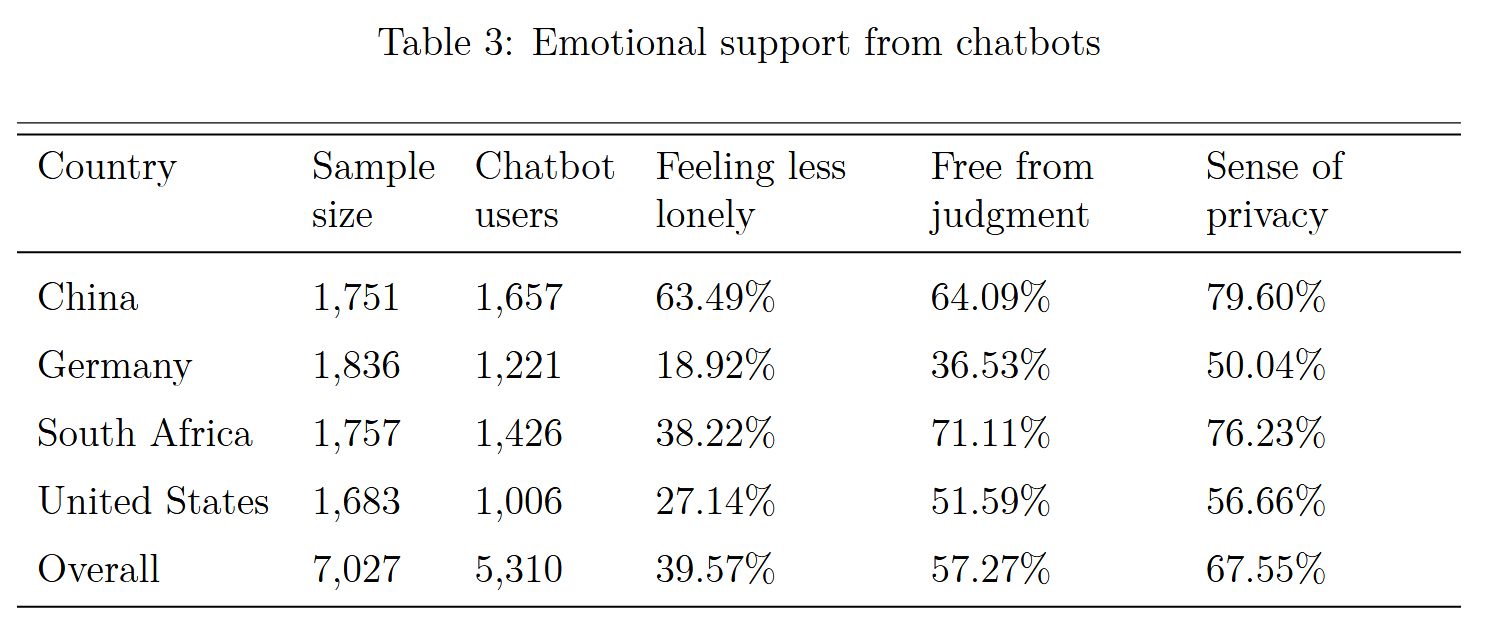
Interesting also was the concentration of question-subjects posed to the chatbots, below.
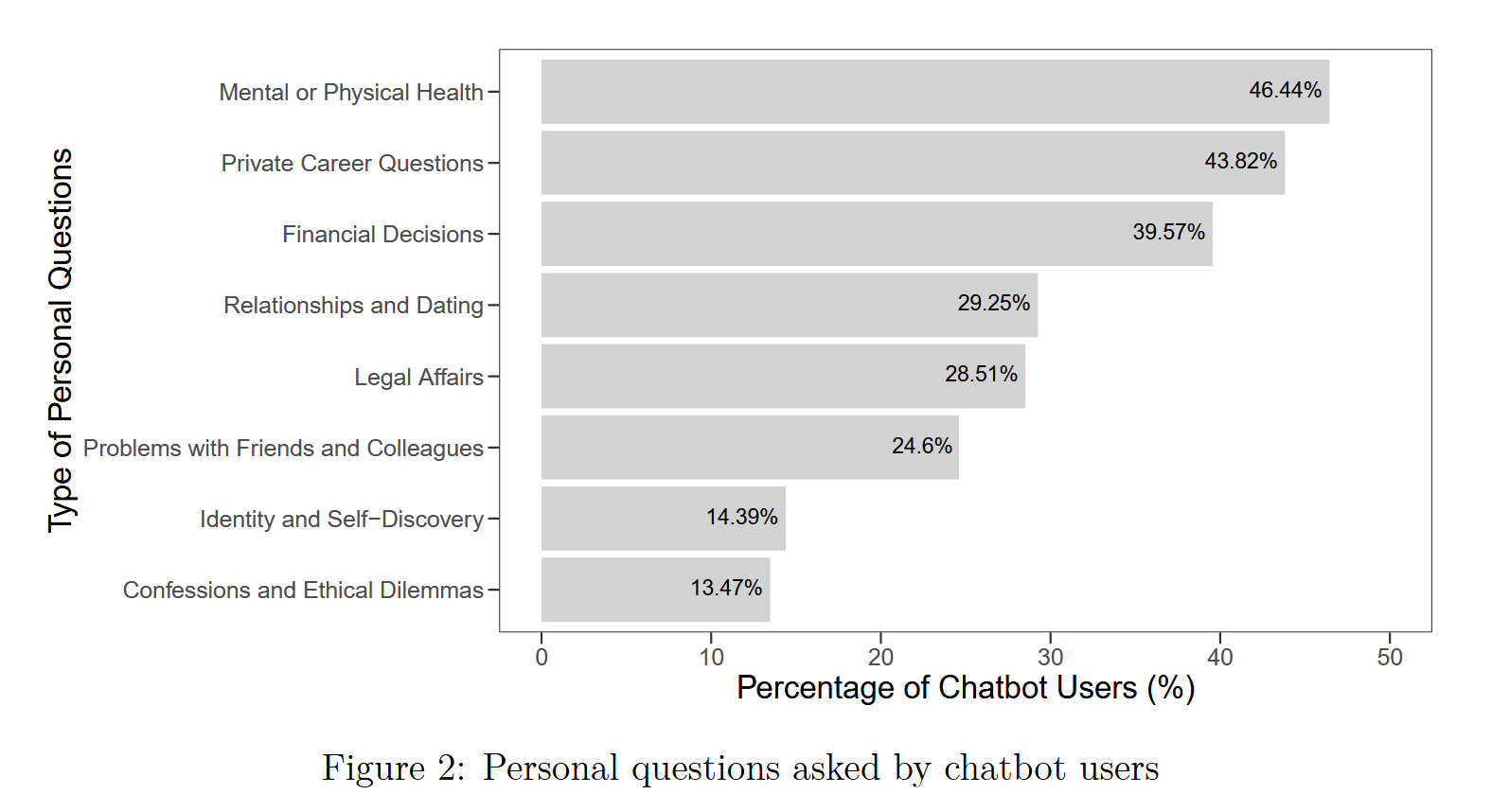
The paper delves more deeply into regional preferences and you can review it in full here Emotional Attachment to AI Chatbots.
Two findings I thought were of especial note.
First, people form strong emotional attachments to their chatbots and that attachment could be abused by unscrupulous operators. Controls therefore should focus on this observed phenomena. Moreover, this behavior was neither age nor education level related so it’s not just impressionable youth that’ll need protecting.
Second, and contrary to what I would have expected, people with large social networks are more likely to use chatbots than bedroom bound otakus. The gregarious it seems are simply adding another friend to their networks but the socially less adept are not getting involved.
Sensibly the researchers sign off noting that we’re still early days in this process and any results must be taken with a dose of commonsensical salt; but this is an area worthy of further study as the phenomena isn’t going away and seems, on balance, to be doing people (currently at least) more good than harm.
Happy Sunday and all the very best for the New Year!