[Although this work leans ‘progressive’ and, in places, flirts with a lack of objectivity it has merit. It’s sponsored by an institution set up shortly after the GFC by Mr. George Soros and that may trigger suspicion for some.]
Thomas Ferguson, Servaas Storm and Jie Chen from the universities of Delft and Massachusetts trace the roots of unhappiness in America back to “..the Neoliberal policy turn of the 1970s, which prioritized inflation control over (full) employment, favored shareholders while discriminating against workers, promoted deregulated insecure jobs over steady stable employment, and brought permanent austerity for those dependent on social security and healthcare.”
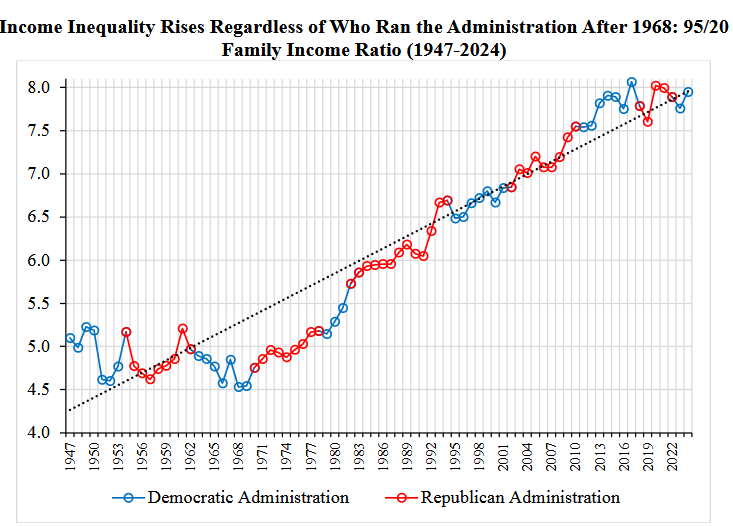
Since that time it hasn’t really mattered who’s been in the White House. Moreover, contrary to claims from the Biden administration that it made strides in addressing problems it was, in fact, as culpable as any before it in progressing inherited macroeconomic orthodoxy and it was from there consumer sentiment really collapsed.
Rather than try and summarize in detail all 97-pages of the report I’ve extracted below some of the more interesting charts. For the full read you can follow this link A Revolution of Falling Expectations: The Macroeconomic Roots of Popular Discontent.
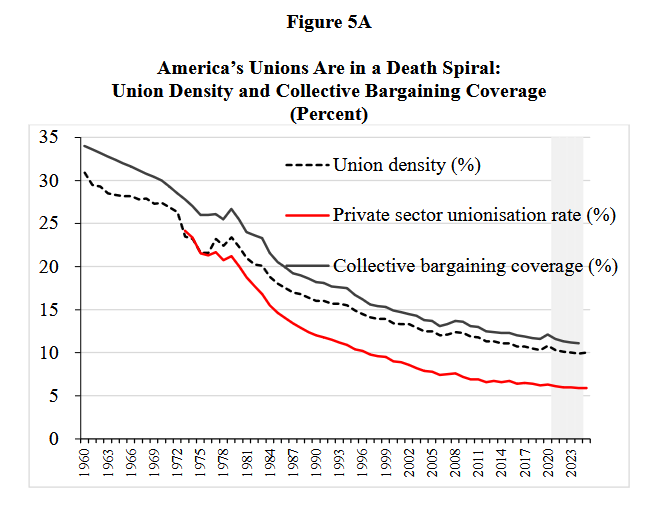
Despite Biden-booster’s claims that the President fomented re-unionization the trend in this regard has been relentlessly down.
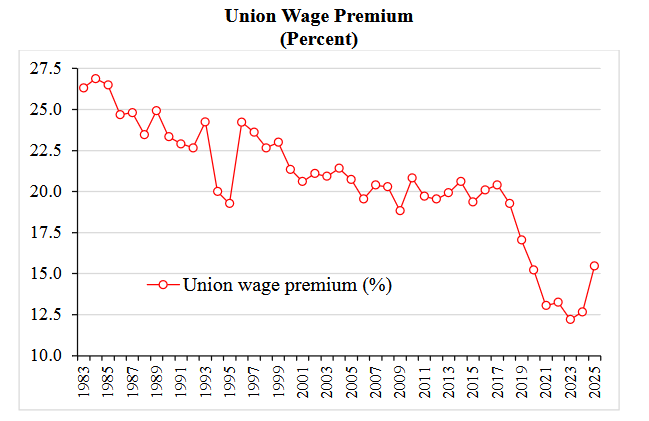
There may have been a slight increase in the benefit of being unionized under Biden but versus the historic trend the gain was small.
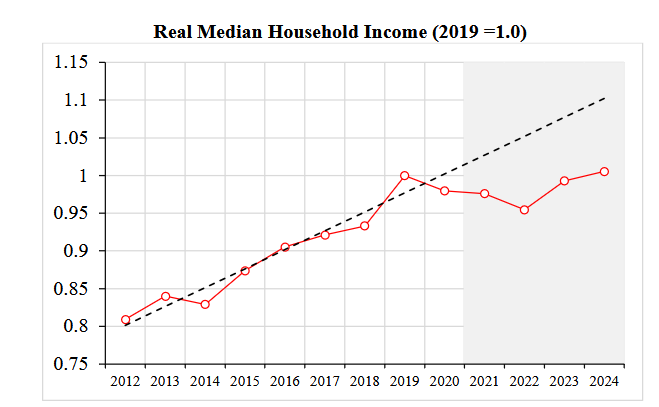
That the Democrats lost office at the last election is no surprise when we look at the reality of household incomes in recent years.
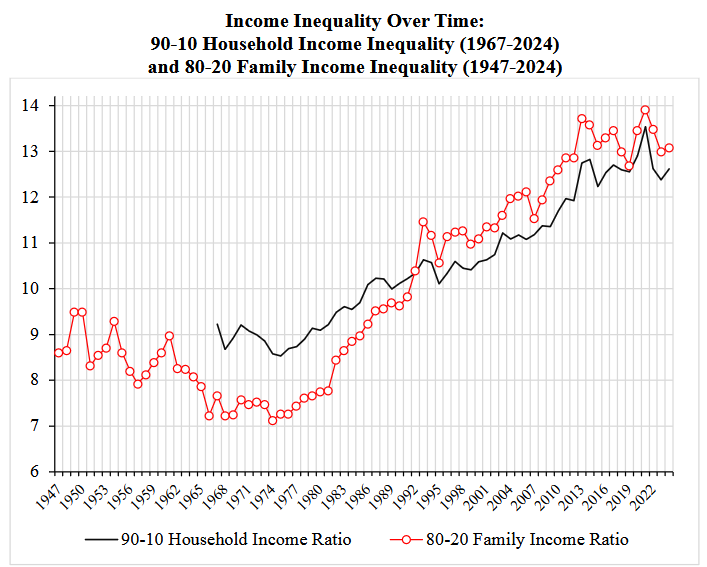
Income inequality is real but appeared to be in retreat around COVID time. Not so, as a one off of lower income rises distorted the series.
This is one of the end results of the above. The most recent print in this series after the paper was published was 48.1, a new low.
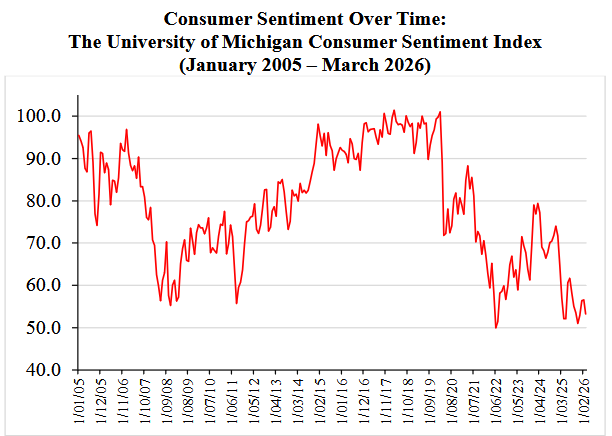
Wealth accumulation for the haves in recent years has no historical precedent, in the process and of course, the rich got a lot richer.
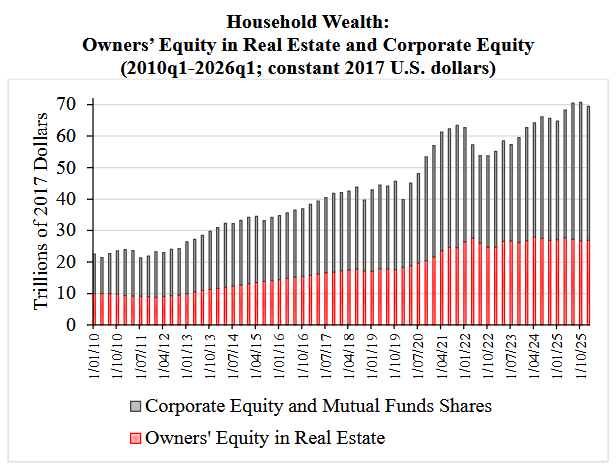
At the same time this hasn’t helped. The authors point out there’s a little bit of ‘China shock’ here but that’s clearly not the sole problem.
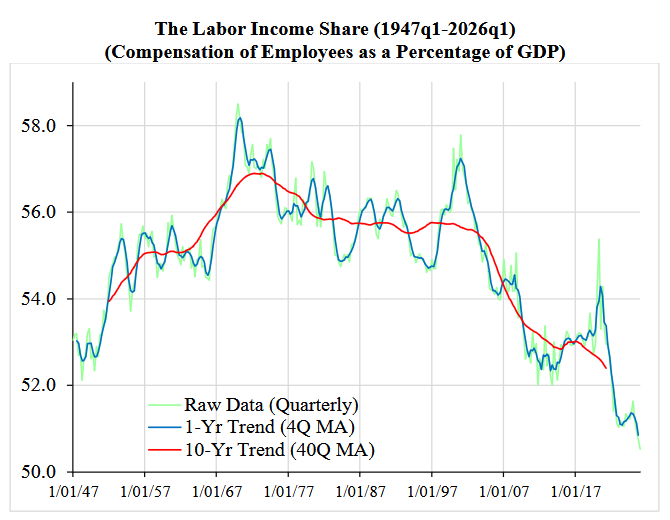
Words fail me on this next one. Especially in the context of the cost of medical services in the United States.
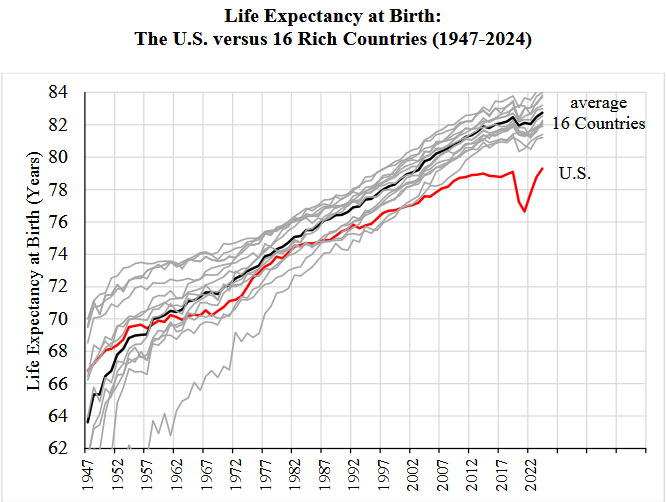
To the author’s point about the long-run nature of some of today’s problems this chart shows a clear break from around 1980.
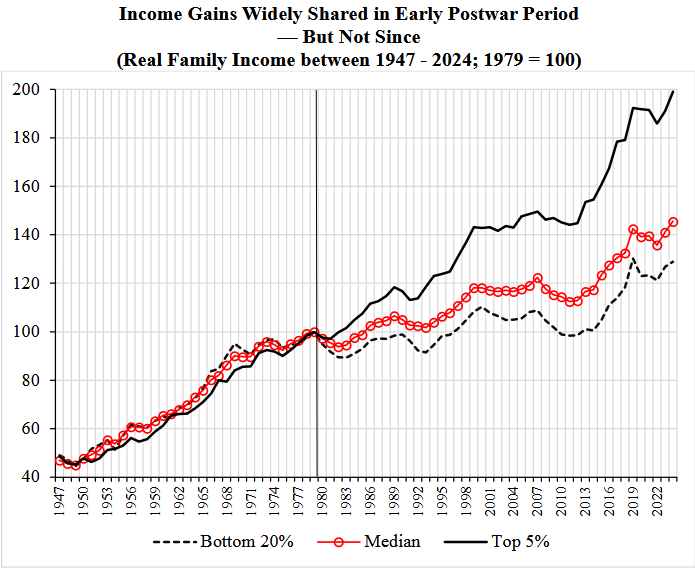
…and it really hasn’t mattered who’s been driving the bus. For the ‘average’ voter then ‘a pox on both their houses’ seems a reasonable response.
The paper’s conclusion (P.70 onward) is a summing up of the argument but crucially cops out of even elemental prescriptions.
This is disturbing because if even a close analysis by smart people of what-ails-America can’t arrive at at least a few commonsensical suggestions for adjustment how does a political/legislative apparatus held hostage by these shortcomings begin to address problems?
As I said at the top, the work has much to commend it but it does go out of its way to ignore some of the things that make the United States among the greatest, if not the greatest country in the world.
That’s not just my view. Ask the hundreds of thousands around the world still trying to get into the place and make better lives for themselves, as so many before them have. It’ll be a long time before China has to address that problem. Just saying.
Happy Sunday.