Like so much that China has done, and is doing, nothing like it in the history of humanity has been seen before. In the case of the paper highlighted today the subject is the extraordinary expansion of higher education that’s taken place starting from 1999.
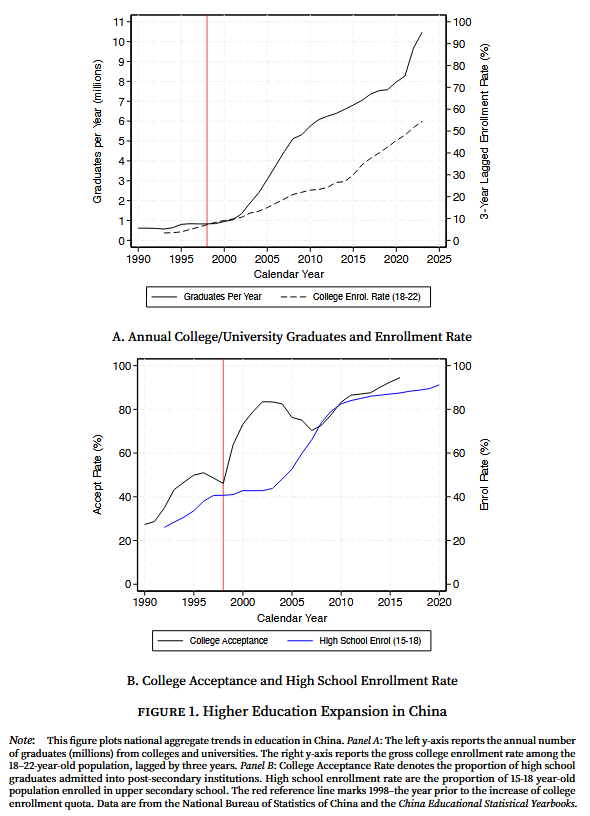
Zhaoxuan Wang from the University of British Columbia has taken a closer look at the phenomenon and presents important conclusions in the paper you can read in full by following this link The Labor Market Consequences of Mass College Expansion. In summary they are:
- In the areas where a supply shock of newly minted graduates appeared it may have helped lower wages so more firms can employ them which may in turn have led to output gains for the economies affected.
- However, the cost-down benefit of more graduates may have just been an effect of greater supply and a general lowering of academic standards and so per capita income growth is less convincing
- A wage gap between younger and older graduates opened up as the new (shabbier?) cohort were not a plug and play replacement option for the better qualified (and costlier) age group above them.
- There seems no sign that the wage disadvantage of the new cohort will go away with time and experience due to the supply and quality problems already fingered above.
As governments around the world have (mostly) all touted the benefits of higher education and increased access this study is a useful reminder that diplomas don’t make better workers nor necessarily increase the life chances of those who newly possess them.

A phenomenon famously referenced in popular culture some time ago.
Happy Sunday.